
If you’re preparing to serve legal documents in Florida, you must know and follow the state’s specific statutes. Failure to comply with the laws for serving legal papers in Florida can lead to invalid service, delays, or even dismissal of your case. This blog explains what you need to know about Florida legal papers service laws, how professional legal process service works, and how to correctly align with Florida’s requirements—so you can confidently move your filing forward with the right strategy.
Understanding Florida Legal Process Service
When initiating legal proceedings in Florida, selecting the right method to deliver required documents is critical. Known as legal process service, this covers delivery of summonses, complaints, subpoenas, and other initiating pleadings. The framework of Florida legal papers service laws ties into jurisdiction, due-process rights, and the timetable of your case.
Under Florida statute, many of the rules for service of process appear in Chapter 48 of the Florida Statutes. By aligning with these rules and engaging professional Florida legal services—like those offered at Legal Serve USA (https://legalserveusa.com/)—you reduce risk and increase efficiency.
Who May Serve Legal Papers in Florida?
Florida’s rules are more specific than some other states when it comes to who may serve process.
The Sheriff or Certified Server
Per §48.021 Fla. Stat., “All process shall be served by the sheriff of the county where the person to be served is found,” except for certain non-enforceable civil process, criminal witness subpoenas, and criminal summonses that may be served by a special or certified process server.
Florida allows county sheriffs to maintain a roster of approved special process servers. Applicants must meet age, residency, background, testing, and oath requirements.
A professional agency like Legal Serve USA handles these requirements so you don’t have to worry.
Why It Matters
If you pick an unauthorized person to serve documents, you risk defective service. Courts may reject service, costing time and money. Expert legal process service providers ensure service is carried out by someone legally eligible.
Methods of Service under Florida Legal Papers Service Laws
Service of process may take different forms in Florida—each has its own requirements and risks.
Personal Service
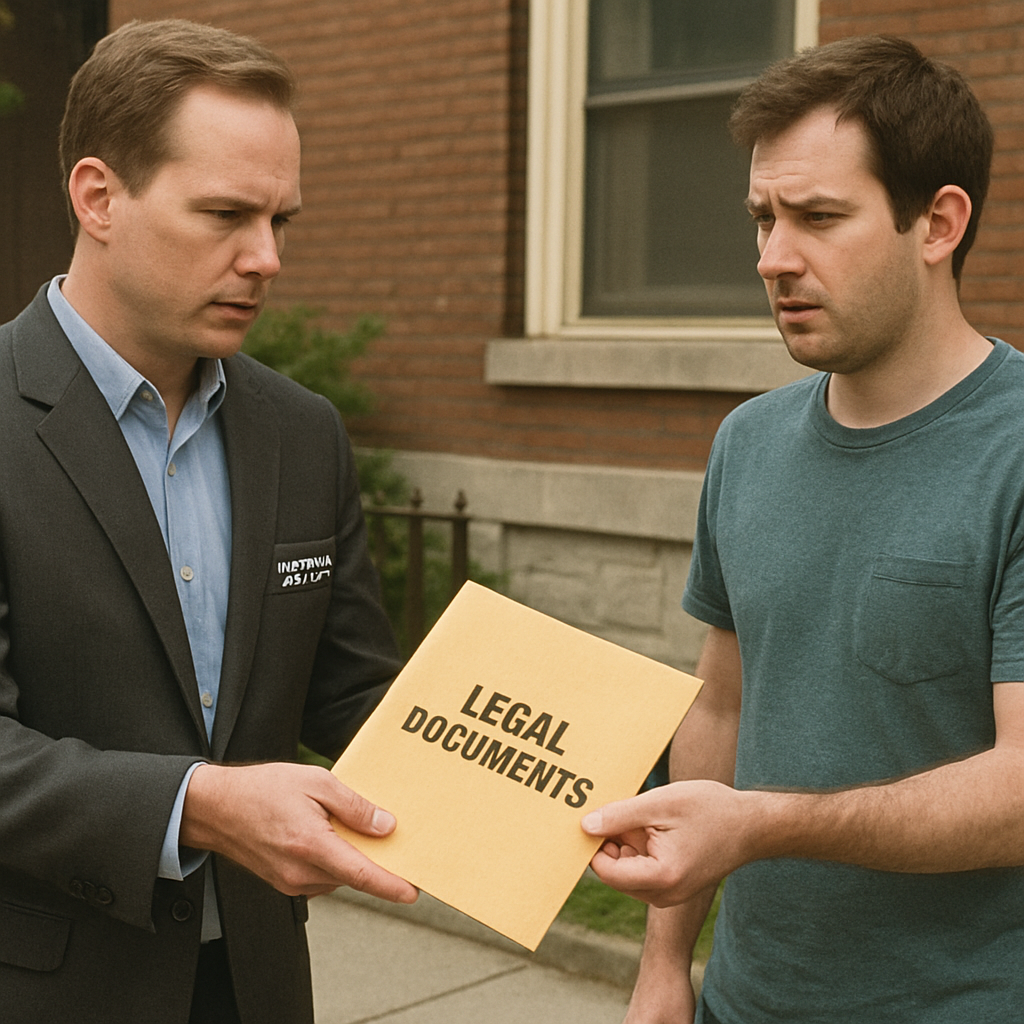
The safest method: personally delivering the documents to the defendant or other required recipient. Under §48.031(1)(a) Fla. Stat., service is made by delivering copies of the process and complaint to the person or by leaving at their usual place of abode with a person aged 15 or older, with notice of contents.
Personal service ensures actual receipt and leaves little room for challenge.
Substituted Service
When direct service fails, Florida allows substituted service in certain circumstances. For instance:
- Serving the spouse when the spouse requests or is a party and lives with the target. §48.031(2)(a) Fla. Stat.
- Serving a sole proprietorship at the place of business after two unsuccessful attempts on the owner. §48.031(2)(b) Fla. Stat.
- When the only known address is a private mailbox or virtual office, substituted service may be made by leaving a copy with the person in charge, provided the server confirms the targeted party maintains that location. §48.031(6)(a) Fla. Stat.
Service by Publication or Constructive Service
In cases where a defendant cannot be located after diligent efforts, Florida law allows service by publication or other constructive methods under Chapter 49. For example, §49.011 and §49.021 govern service by publication.
This is a last-resort method and must be used only after the correct attempts at personal or substituted service have been made.
Service Out of State or on Nonresidents
Florida statute §48.194 allows service on persons outside the state by using a method that would be valid inside Florida—provided the server is authorized in the jurisdiction where service occurs.
Knowing these rules is critical for litigation involving out-of-state defendants.
Key Requirements to Comply With Florida Legal Papers Service Laws
To ensure your service is valid under Florida law, you must adhere to several requirements.
Deliver the Correct Documents
Service isn’t just about handing something over. According to §48.031(1)(a) Fla. Stat., the server must deliver a copy of the process along with the complaint, petition, or other initial pleading.
Accurate Return of Service
After service is made, §48.031(5) Fla. Stat. mandates that the server place the date, time, and the server’s identification number or initials on the first page of at least one of the documents served. The return-of-service must list all initial pleadings delivered and filed with the court.
Diligence and Timing
When substituted or publication service is used, you must document all reasonable efforts to perform personal service. Florida courts scrutinize whether due diligence was exercised—especially when proceeding to publication.
While Florida doesn’t impose a universal deadline for service, delays may negatively impact your case.
Electronic Service of Later Filings
While initial service follows Chapter 48 and Chapter 49 procedures, subsequent pleadings often must follow e-service rules under Rule 2.516 Fla.R.Civ.P.
Using a process service provider that tracks both physical and electronic service simplifies this step.
Common Mistakes in Process Service and How to Avoid Them
Even experienced legal professionals can slip up when handling legal process service under Florida rules. Here’s what to watch for and how to avoid missteps.
Mistake: Using Unqualified Servers
If your server is not certified or not properly appointed, service could be invalid. Florida requires sheriffs or certified/special process servers.
Solution: Use an experienced agency like Legal Serve USA that understands certification and appointments.
Mistake: Serving on Sunday or at Wrong Time/Place
Some materials note that service attempted on Sunday without a court order is void (dies non juridicum).
Solution: Schedule service during acceptable hours and avoid service on non-juridical days unless you have explicit court permission.
Mistake: Serving Wrong Address or Wrong Person
If you serve at an incorrect address or deliver to someone not authorized, the service may fail.
Solution: Use skip-tracing or verification tools and rely on professional servers who document their efforts.
Mistake: Improper Return of Service or No Filing
Having physical service is one thing—but failing to file the return or having deficiencies in the return can invalidate service.
Solution: Confirm the return is correctly completed including date/time, server ID/initials, method of service, and identity of person served.
Mistake: Jumping Too Quickly to Publication
Publication service is only valid after diligent attempts at personal/substituted service have failed. Skipping steps can lead to challenges.
Solution: Document every attempt and only pivot to publication when justified.
Why Turn to Legal Serve USA for Professional Service of Process
Given the risks and detailed rules embedded in the laws for serving legal papers in Florida, partnering with a professional firm offers major benefits. At Legal Serve USA, our tailored Florida legal services include:
- Experienced process servers certified across Florida counties
- Integrated skip-tracing that identifies hard-to-locate individuals or businesses
- Real-time updates and tracking for service attempts and completion
- Digital affidavit/return filing, filed correctly with the court
- Nationwide coordination when service involves interstate parties
- Guidance on service strategy aligned with your case timeline
By leveraging a specialist for legal process service, you avoid procedural missteps, ensure compliance with Florida statutes, and keep your filing on track.
Preparing for Filing: A Checklist for Compliance
Use this practical checklist to prepare your service strategy under Florida law:
- Choose the correct initiating documents (summons + complaint/petition)
- Decide on the method of service: personal, substituted, publication, or out-of-state
- Confirm the identity of the defendant and best known address or business location
- Retain or engage a qualified server who is legally permitted under Florida statute
- Document all attempts, especially when using substituted or publication service
- Deliver the process and pleadings in the manner mandated by statute (§48.031)
- Obtain and file the return/affidavit of service with all required elements (date/time, server ID/initials)
- Ensure subsequent service of pleadings meets Rule 2.516 requirements for e-service
- Monitor deadlines and ensure prompt execution of service to align with case needs
Following this checklist ensures you satisfy the core requirements of Florida legal papers service laws and set your case on firm footing.
Advanced Considerations in Florida Service Laws
For more complex filings or special parties, you’ll need to account for advanced rules.

by Brett Jordan (https://unsplash.com/@brett_jordan)
Service on Corporate and Out-of-State Entities
When the defendant is a business or a foreign entity doing business in Florida, service may need to be directed to the Florida Secretary of State or the registered agent under §48.161 Fla. Stat.
Ensuring proper service on these entities is critical to maintain jurisdiction.
Unknown Parties / “John Doe” Plaintiffs
In eviction or possession cases, Florida’s §48.184 allows service against unknown parties in possession after due diligence efforts.
The process server must document efforts to identify and locate the unknown defendants before this service method applies.
Electronic Service of Later Pleadings
Initial service uses the statutes in Chapter 48 & 49, but later filings often fall under Rule 2.516 for e-service of documents.
Workflow coordination between physical process servers and e-service systems is key.
How Legal Serve USA Works with You
At Legal Serve USA, we focus on helping clients meet the demands of Florida legal services for service of process so you can focus on case strategy, not logistics. Here’s how our approach works:
- Step 1 – Upload your documents: You submit your filed complaint, summons, and any other necessary forms.
- Step 2 – We plan and execute service: Our team matches the correct service method (personal, substituted, etc) and deploys certified servers across Florida.
- Step 3 – Proof and filing: Immediately upon completion, we deliver the affidavit/return of service and ensure it’s filed correctly with the court.
- Step 4 – Follow-up & tracking: We provide you real-time updates so you know whether service is complete, in progress, or requires additional efforts.
By working with us, you rest assured your service strategy aligns with the governing statutes and court expectations.
Final Thoughts
Complying with Florida legal papers service laws isn’t optional—it’s foundational to the success of your litigation. Whether you’re serving an individual defendant, a business entity, or handling inter-state service, understanding Florida’s statutes (like §48.021, §48.031, §48.161) and rules (such as Rule 2.516) is critical.
For professional assistance, dependable execution, and peace of mind when it comes to legal process service, contact Legal Serve USA. Reach out today at (888) 575-3553 or email serve@legalserveusa.com to get started.ase.