
Proper service of process is an important part of a Florida legal case. It provides formal notice that a lawsuit or other legal proceeding has been started and gives the recipient an opportunity to respond. But what happens when court records say you were served even though you believe the documents were delivered incorrectly or never reached you?
If you are researching how to prove you were not served properly in Florida, the answer usually depends on the facts of the case, the method of service used, and the evidence available. A disagreement with the return of service does not automatically establish improper service. Records, witnesses, addresses, dates, and other documentation may all become important.
Understanding Florida process server rules can help explain why accurate, professional service and detailed documentation matter for everyone involved.
What Does Proper Service Mean in Florida?
Florida law establishes requirements for serving legal process. For original process on an individual, service may generally be accomplished by personally delivering the required documents or, under appropriate circumstances, leaving them at the person’s usual place of abode with a resident who is at least 15 years old and informing that person of the contents.
Different rules can apply depending on who is being served. For example, serving an individual may involve different procedures from serving a corporation, LLC, partnership, government agency, or person outside Florida.
There are also process server requirements concerning who is authorized to perform certain types of service.
Because the requirements vary according to the situation, proper service involves more than showing that paperwork was delivered somewhere. The identity of the recipient, location, method of service, and information recorded afterward can all matter.
What Could Raise Questions About Whether You Were Properly Served?
A person might question service after discovering a lawsuit through court records, receiving notice of a judgment, or learning that papers were reportedly delivered somewhere they did not live.
Potential issues may include:
- Service recorded at an address that was not the person’s usual residence
- Documents reportedly given to someone who did not live at that residence
- Incorrect information about the date, time, or location of service
- Service made on the wrong person
- A significant discrepancy between the return of service and other available records
However, unusual circumstances do not necessarily mean service was legally invalid. Whether service complied with Florida law is a legal determination based on the applicable rules and facts.
How to Prove You Were Not Served Properly in Florida
If you believe service was improper, start by gathering objective information rather than relying only on your recollection.
1. Review the Return or Proof of Service
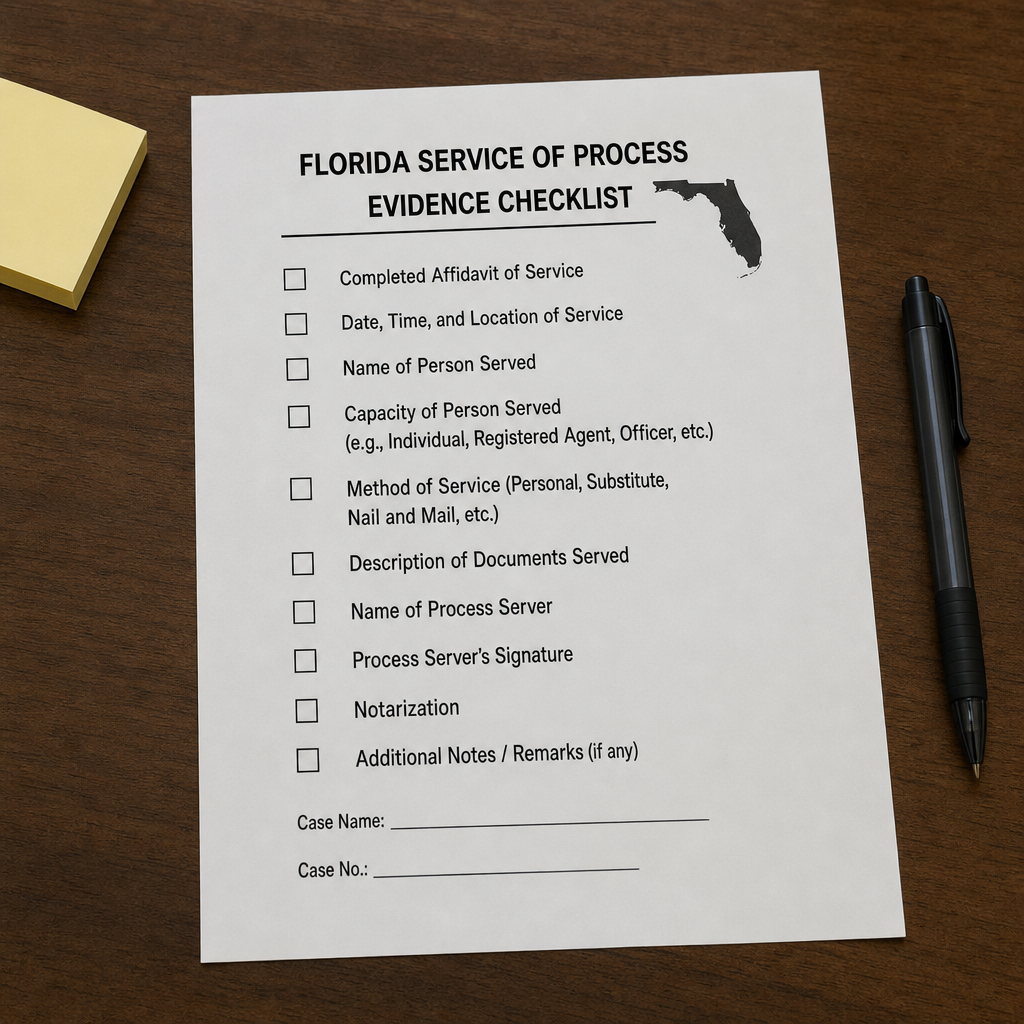
One of the first documents to examine is the return of service. It may contain information about when and where service occurred, how it was completed, and who received the papers.
Compare those details with what you know about your location and residence at that time.
For example, if the return lists an address where you had stopped living months earlier, documents showing your actual residence during that period may be relevant.
2. Collect Records That Establish Your Location
Strong Florida not served properly evidence may include independent records that can be compared with the information recorded by the process server.
Depending on the circumstances, useful records could include:
- Lease agreements or property records
- Utility statements showing your residence
- Employment or business attendance records
- Travel records and dated receipts
- Other reliable documents establishing where you lived or were located
The value of any particular record depends on the facts and the type of service being disputed.
3. Identify Potential Witnesses
Witness testimony may also be relevant. For example, a person who lived at the address in question may have information about whether you resided there or whether someone attempted to deliver documents.
Witnesses should be able to provide factual information based on what they personally know. Their role is not simply to state that they believe service was improper.
4. Compare the Evidence With the Service Record
The most useful evidence often directly addresses what is stated in the return of service.
Suppose a return says papers were delivered at your usual residence on a particular date. Evidence showing that you had permanently moved before that date could become important. Likewise, if the return identifies a person who supposedly accepted documents, evidence concerning that person’s identity or residence may be relevant.
Why the Process Server’s Documentation Matters
Professional documentation protects the integrity of service.
A process server should maintain accurate information about attempts and completed service. Depending on the assignment and applicable requirements, the record may identify the date, time, location, method of service, and other relevant details.
This documentation can become especially important when service is later questioned.
Florida’s certification requirements also illustrate why professional standards matter. Certified process servers must satisfy statutory qualifications, and Florida law requires a bond intended to benefit people wrongfully injured through certain misconduct, including malfeasance, misfeasance, evidence of neglect related to duty, or incompetence.
For clients, strong Florida customer service in process serving should also mean clear communication about assignments, accurate status updates, and dependable records rather than simply dropping off documents and considering the job finished.
Can Improper Service Affect a Court Case?
Potentially, but the consequences depend heavily on the case and circumstances.
Service of process relates to formal notice and the court’s ability to exercise jurisdiction over a party. A genuine defect can therefore be significant. At the same time, challenges to service involve procedural rules, deadlines, possible waiver issues, and other legal considerations.
If you believe you were improperly served, consider speaking with a qualified Florida attorney promptly. A process serving company can explain its service procedures and records, but it should not replace legal advice about challenging service, filing a motion, or determining how an alleged defect affects your case.
Waiting can create additional complications, particularly when a lawsuit already has response deadlines.
Why Accurate Process Serving Protects Everyone
Proper service is not merely a technical requirement for the person filing a lawsuit. It also helps protect the person receiving the documents.
Accurate service creates a clearer record of what happened and reduces disputes about whether notice was provided. This is why professional process servers must pay close attention to addresses, identities, dates, service methods, and documentation.
For attorneys and plaintiffs, proper service can help prevent avoidable delays. For defendants and other recipients, it helps ensure that legal notice is provided according to applicable requirements.
Work With Professional Florida Process Servers
Questions about how to prove you were not served properly Florida demonstrate why reliable service practices matter from the beginning. Accurate attempts, proper procedures, and detailed records can help reduce uncertainty when legal documents must be delivered.
Legal Serve USA provides professional process serving throughout Florida and assists clients with nationwide and international service. The company also offers skip tracing and affidavits of due and diligent search for assignments involving difficult-to-locate individuals.
Whether you are a law firm coordinating multiple cases, a business serving legal documents, or an individual who needs professional service of process, working with an experienced provider can help ensure the assignment is handled carefully.
Need professional process serving in Florida? Contact Legal Serve USA at (888) 575-3553 or email serve@legalserveusa.com to discuss your service needs and get started.